23/09/26
By AfterPost
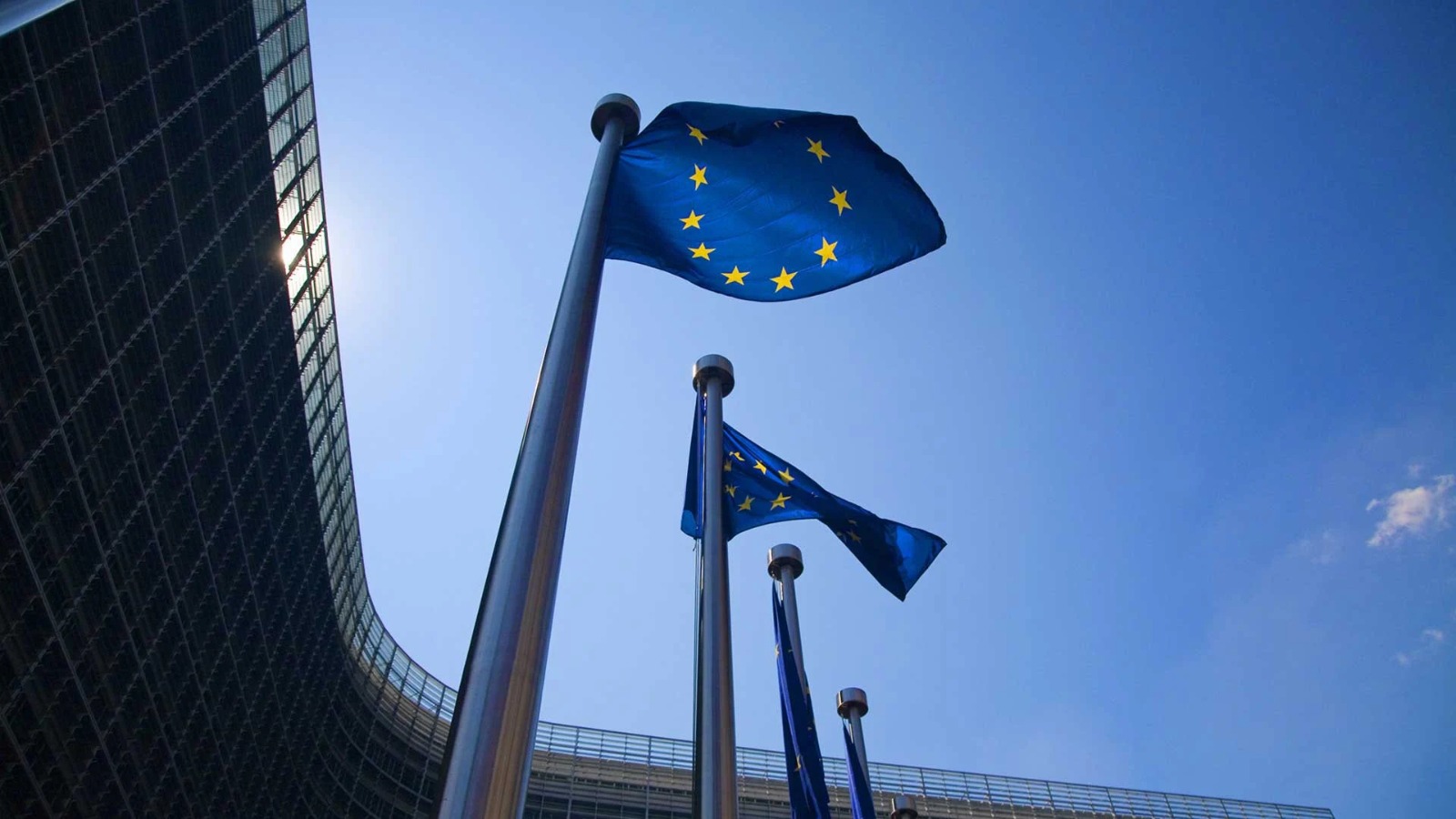
Brussels pays for the poll that says Brussels is popular. That is the one-sentence version of the inquiry Hungary's Balazs Orban just launched in the European Parliament.
Fresh into his MEP mandate, Viktor Orban's former political director isn't arguing that Eurobarometer is fake. He's asking a more uncomfortable question: who controls the answer key?
His target is the EU's official polling machine — Standard Eurobarometer, run by the European Commission since 1974, surveying ∼26,000 citizens face-to-face twice a year.
Orban's hook is a contrast that went viral in Brussels policy circles this month.
This spring, Eurobarometer found 60% of EU citizens optimistic about the EU's future.
This month, the European Council on Foreign Relations (ECFR) published "Future Nostalgia" — 5,834 AI-moderated deep interviews — finding 56% agree Europe's future is in danger, 68% describe Europe in terms of decline, and 74% say Europe is handling its biggest challenges badly.
Same continent, opposite mood. How?
*The methodology trap everyone is ignoring*
Here's what most hot takes miss — and what makes Orban's inquiry smarter than it looks:
They didn't ask the same thing.
Eurobarometer asked EU27 citizens: "Are you optimistic about the future of the EU?" — an institution.
ECFR asked people in 6 countries (France, Germany, Italy, Poland, Netherlands + UK): "Some people say Europe's future is in danger. How do you react?" — a civilization.
You can think Europe is in danger _and_ feel optimistic the EU might fix it. You can love Europe and distrust Brussels. The 75% in ECFR who want a "stronger, more united Europe" in 20 years prove that — only 13% want less EU.
Orban knows this. His point isn't that ECFR disproves Eurobarometer. It's that question design _is_ politics.
And on that, he has history on his side.
*The paper Brussels never answered*
In 2015, the Max Planck Institute for the Study of Societies reviewed 15 years of Eurobarometer data and found a pattern: leading questions, unbalanced answer options, and the quiet removal of questions that had produced critical responses.
Their conclusion: unlikely to be accidental.
In 2024, MCC Brussels flagged a Eurobarometer survey that found support for new EU revenue sources — without asking if respondents would accept higher taxes to pay for them. MCC called it "manufacturing consent."
Dutch pollster Maurice de Hond goes further: he argues Eurobarometer's long face-to-face interviews create non-response bias, overrepresenting highly educated, pro-EU respondents, especially in countries like the Netherlands.
None of these critics were answered with a full audit. That's what Orban is now demanding: publish who drafts the questionnaires, who signs off, which contractors do fieldwork, what it costs, and what neutrality checks exist.
*Why this keyword matters now*
Search "Eurobarometer bias" today and you get PDFs and academic footnotes. No newsroom owns it. That's the SEO gap.
Orban — a former think-tank director now with parliamentary questions, budget discharge powers, and a staff — can force the Commission to put numbers on the record. Every written question becomes a citable source. Every Commission answer becomes a headline.
Whether you think he's defending Hungarian sovereignty or trolling Brussels, the transparency ask is hard to oppose: if the EU's most quoted legitimacy metric is publicly funded, its methodology should be publicly auditable.
The ECFR study doesn't prove Europeans have abandoned the EU. It proves something more useful: Europeans can be pro-European and deeply pessimistic at the same time. A poll that only measures optimism will miss the pessimism. A poll that only measures danger will miss the hope.
Brussels funds the poll that tells Brussels what Europeans think. Maybe Europeans really are that optimistic. But as Orban puts it: a poll grading its own client should come with the answer key.
Sources: Standard Eurobarometer 103 Spring 2025, ECFR Future Nostalgia Sept 2026, Max Planck MPIfG Discussion Paper 2015, MCC Brussels 2024, Maurice de Hond*