24/09/26
By AfterPost
Taiwan has just made its most significant upgrade in years to the defense of its loneliest outpost.
Late Wednesday, Taiwan's Coast Guard Administration announced it had "comprehensively upgraded" patrol capacity around the Pratas Islands (Dongsha), the tiny atoll in the northern South China Sea that military planners have long called Taiwan's most indefensible territory.
The core of the upgrade: a newly built 100-tonne-class patrol boat now permanently stationed at Pratas following completion of a wharf project in July, plus regular deployments of large patrol vessels to surrounding waters — a multi-layered presence Taipei openly frames as deterrence against China.
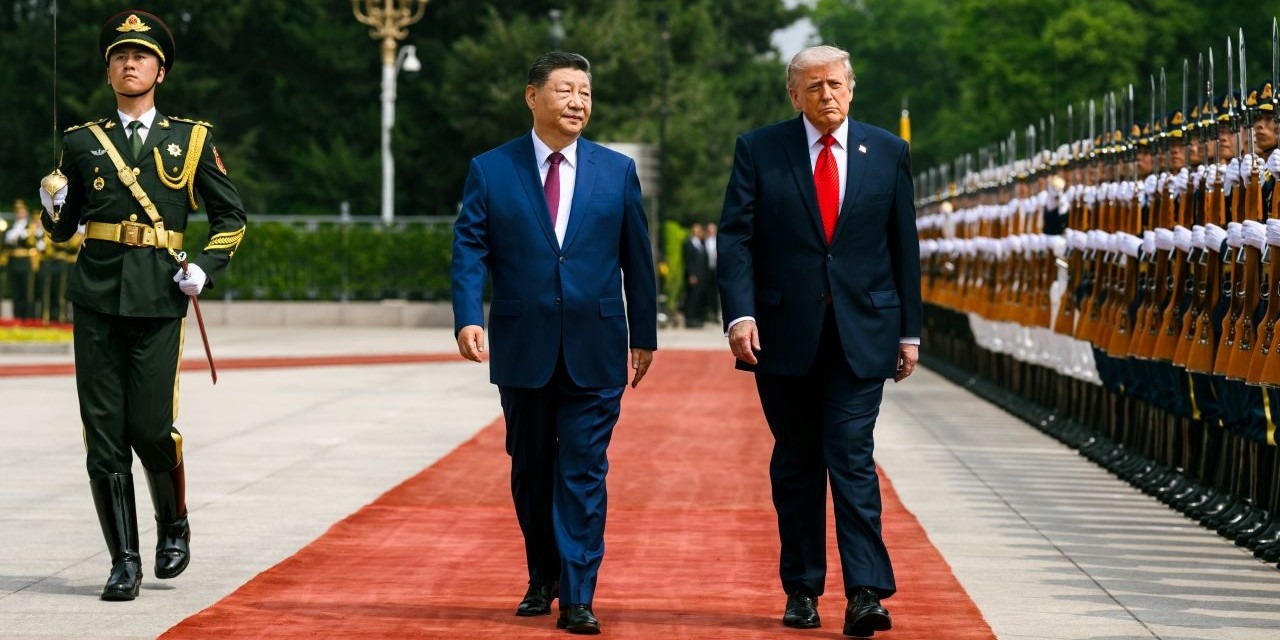
It comes as Chinese Coast Guard ships increase patrols near Pratas, most recently earlier this month, and as Xi Jinping prepares to meet Donald Trump in Washington — where Beijing is expected to press for reduced U.S. arms sales to Taiwan.
This is not routine maintenance. It is a strategic signal.
*1. Why Pratas matters: 400km of vulnerability*
Lying roughly halfway between southern Taiwan and Hong Kong, Pratas is more than 400km (250 miles) from Kaohsiung. It has an airstrip, a small Coast Guard garrison, marine researchers, and no permanent civilian population. It is also a national park with pristine reefs.
Security experts have warned for a decade that Pratas could be China's low-cost first move in a Taiwan crisis — easy to seize, hard for Taiwan to retake, and politically explosive without triggering full war. Unlike Itu Aba (Taiping) in the Spratlys, which got a new wharf in 2023 capable of handling 4,000-ton ships, Pratas until now lacked infrastructure for sustained large-vessel presence.
That changed in July. The new wharf allows permanent basing of the 100-tonne boat for nearshore interdiction and "immediate mobile response," while larger cutters — likely 1,000-tonne Chiayi-class or 3,000-tonne Miaoli-class vessels — can now rotate through without returning to Taiwan for fuel and resupply.
In plain language: Taiwan can now stay, not just visit.
*2. What Taiwan actually deployed*
The Coast Guard statement is deliberately vague on hull numbers, but the structure is clear:
- *Layer 1 — Permanent:* 100-tonne patrol boat, newly built, stationed at Pratas. Role: reef patrol, anti-smuggling, rapid response to Chinese fishing militia incursions. Taiwan also confirmed it seized nine Chinese fishing boats around Pratas since January 2026, repurposing them for conservation patrols — a public shaming tactic.
- *Layer 2 — Rotational:* "Large patrol vessels are being regularly deployed." In Taiwan Coast Guard doctrine, this means 1,000-tonne+ vessels with helicopter decks, water cannon, and 20mm autocannon. These provide offshore deterrence against China Coast Guard's Zhaotou-class cutters that have been probing the area.
- *Layer 3 — Infrastructure:* The July wharf completion is the enabler. Without it, permanent stationing was impossible. With it, Taiwan can sustain logistics, fuel, and crew rotations.
This mirrors what Taiwan did at Itu Aba in 2023, but faster and more explicitly tied to Chinese pressure.
*3. China's gray-zone squeeze*
China recognizes no Taiwanese sovereignty claim, including over Pratas. Beijing's Taiwan Affairs Office did not respond to Reuters' request for comment — typical.
But the pattern is documented: Chinese Coast Guard ships have increased patrols near Pratas throughout 2025-2026, part of a broader five-year intensification of military pressure around Taiwan. This includes daily PLA Air Force incursions across the median line, naval exercises, and coast guard "law enforcement" patrols that blur military and civilian lines.
Pratas is ideal for gray-zone tactics. China can harass with coast guard and fishing militia without firing a shot, testing Taiwan's response time 400km from home. Each unanswered incursion normalizes Chinese presence.
Taiwan's answer now is presence-for-presence. By publicizing the upgrade, Taipei is telling Beijing — and Washington — that it will not cede the atoll by default.
*4. Timing: the Trump-Xi factor*
Your source note is critical: this announcement lands as Xi meets Trump in Washington, with Taiwan expected to be on the agenda.
Beijing has consistently sought to link broader U.S.-China negotiations — trade, fentanyl, TikTok — to reduced U.S. support for Taiwan. Trump, who has publicly questioned why the U.S. should defend Taiwan without Taipei paying more, has pushed Taiwan to raise defense spending above 3% of GDP.
Taiwan Premier Cho Jung-tai already announced 2027 defense spending will exceed 3% GDP. The Pratas upgrade is the operational proof point: Taipei is spending, deploying, and holding remote territory.
For Washington, Pratas is a test case. If Taiwan cannot hold Pratas, a U.S. official told Reuters on background last year, "it raises questions about the outer islands writ large" — including Kinmen and Matsu, just kilometers from China.
By fortifying Pratas now, Taiwan strengthens its hand before any Trump-Xi deal.
*5. What this is not: not militarization, yet*
Importantly, Pratas remains under Coast Guard, not Navy or Marine Corps, command. Taiwan is framing this as law enforcement — anti-smuggling, reef protection, fisheries enforcement — not military fortification.
This is deliberate. It keeps Taiwan below the threshold that would justify a PLA military response, while still establishing administrative control. It is the same playbook China uses.
But the dual-use reality is clear: a wharf that can handle coast guard cutters can handle naval logistics. An airstrip that takes C-130 resupply flights can take surveillance aircraft. The 100-tonne boat carries water cannon today; it can be replaced.
*6. Three scenarios to watch*
*Scenario A — Managed deterrence (most likely):* Both coast guards maintain presence, occasional standoffs, no seizure. Pratas becomes like the Senkakus: contested, patrolled, stable.
*Scenario B — Chinese seizure rehearsal:* PLA Navy and Coast Guard conduct a joint "rescue" or "inspection" exercise around Pratas, temporarily occupying reefs. Taiwan would face a terrible choice: escalate 400km from home or accept fait accompli.
*Scenario C — Bargaining chip:* Beijing offers to "de-escalate" around Pratas in exchange for U.S. concessions on arms sales in the Trump-Xi talks. Taiwan's upgrade makes that harder — you can't trade away what Taipei has just fortified.
Taiwan's Coast Guard closed its statement with language rarely this blunt: "strong multi-layered deterrence and mobile enforcement capabilities."
Deterrence is not a coast guard word. It is a military word. Taipei chose it on purpose.
The message to Beijing: Pratas is not empty. The message to Washington: we are investing in our own defense. The message to Taipei's public: 400km away still counts as Taiwan.
In the South China Sea, concrete and hulls speak louder than communiqués. Taiwan just poured both.
*Sources: Reuters Taipei, Taiwan Coast Guard Administration Sept 23 statement, Focus Taiwan