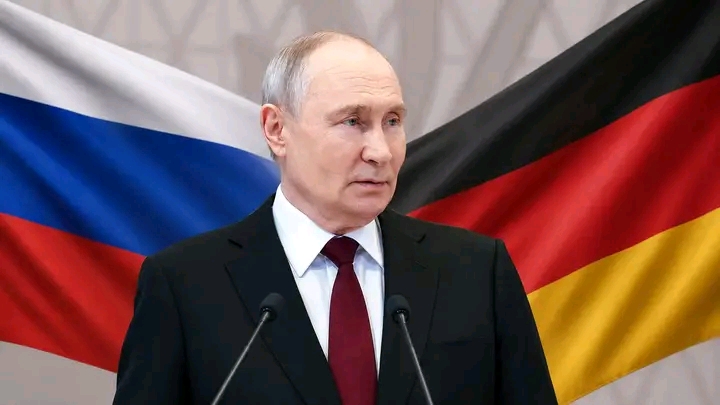
On Saturday, September 26, 2026, in a cramped meeting room on the sidelines of the 81st session of the UN General Assembly in New York, Russian Foreign Minister Sergey Lavrov shook hands with German Foreign Minister Johann Wadephul.
The press was allowed in for seconds. An Interfax correspondent noted the handshake, the aides filing in behind, then the doors closing. No opening remarks were broadcast. No questions were allowed.
It lasted about 20 minutes.
It was the first meeting between Russian and German foreign ministers in four and a half years. The last was January 18, 2022, between Lavrov and Annalena Baerbock, then Germany's foreign minister, in Moscow. Thirty-six days later, Russia launched its full-scale invasion of Ukraine.
That context is why 20 minutes matters.
According to Russian Foreign Ministry spokeswoman Maria Zakharova, the meeting happened at Berlin's initiative. Writing on Telegram, she said Wadephul's staff had demanded strict conditions: restrict media access, ensure no questions, do not record audio of opening remarks, and impose an embargo on the exhibition of materials.
In other words, Germany wanted the meeting, but did not want it to look like a meeting.
Deutsche Welle, AFP, TASS and Azernews all confirmed the encounter. None could report substance, because none was disclosed. That silence itself is the story.
From Ostpolitik to Deep Freeze
To understand why a brief, secretive pull-aside is news, you have to remember what Germany-Russia relations were.
For 50 years, from Willy Brandt's Ostpolitik through Angela Merkel's 16 years as chancellor, Berlin's doctrine was Wandel durch Handel, change through trade. Russia supplied cheap gas through Nord Stream. Germany supplied machinery, cars and political cover. Even after 2014 and the annexation of Crimea, Berlin pushed Minsk agreements and kept the pipeline going.
The invasion in February 2022 shattered that. Germany, under Olaf Scholz, executed a Zeitenwende, a historic turning point: 100 billion euros for the Bundeswehr, weapons to Ukraine, and a painful decoupling from Russian energy.
Under Chancellor Friedrich Merz, who took office in 2025, and Foreign Minister Johann Wadephul, that shift has hardened into open confrontation. Berlin is now Ukraine's second largest military backer in Europe after the UK. German Leopard tanks, IRIS-T air defenses and Taurus cruise missiles have become central to Ukraine's arsenal.
Moscow now lists Germany as an "unfriendly state." Russian state television routinely calls Berlin a direct party to the conflict.
The foreign ministers had not spoken face to face in all that time. Lower level contacts continued in multilateral formats, but the top diplomatic channel was dead.
The Drone Crisis That Triggered the Break
The immediate backdrop to the New York meeting is not Ukraine, but drones over Germany.
In early September 2026, German Interior Minister Alexander Dobrindt said Berlin had concluded Russia was involved in a drone incident at Leipzig Airport, after examining the "technologies used" and intelligence data. Leipzig is a critical hub for military logistics, including transfers related to Ukraine.
German media reported two other incidents:
In August, drones carrying explosives were discovered near a Ukrainian military transport aircraft in Leipzig, raising fears of sabotage against arms deliveries.
In September, drone debris was found near the Bundeswehr military airbase in Wunstorf in Lower Saxony, home to A400M transport aircraft.
Chancellor Merz promised a "very swift" response. Berlin then announced the closure of the Russian Consulate General in Bonn and the Russian House in Berlin, the cultural center seen by German intelligence as a hub for influence operations.
Moscow denied involvement and retaliated symmetrically: closure of the German consulate in St. Petersburg and the Russian branches of the Goethe-Institut, Germany's flagship cultural organization.
This is classic hybrid warfare escalation. No one was killed, but the message was clear. Germany believes Russia is testing NATO's eastern flank with deniable sabotage. Russia believes Germany is using unproven accusations to justify further militarization.
It is in this atmosphere that Wadephul requested 20 minutes with Lavrov.
What Was Said? What Was Not
Neither ministry has released a readout.
Western diplomats, speaking to DW on background, said Ukraine was "likely" top of the agenda, alongside the drone allegations and the consulate closures. Russian sources, quoted by Izvestia, framed it as a German request to "convey signals" rather than a negotiation.
Three things were notably absent:
First, no joint statement. In normal diplomacy, even a frosty meeting produces a line about "frank exchange." Here, nothing.
Second, no photo beyond the handshake. The German side's insistence on no audio and no questions suggests Berlin feared domestic backlash. Meeting Lavrov is politically toxic in Germany. Merz's coalition includes Greens and CDU hawks who view any contact as appeasement.
Third, no follow-up announced. This was not the start of a process. It was a one-off.
That points to a limited purpose: crisis management, not reconciliation. Wadephul likely wanted to deliver a direct warning on drones and sabotage, and to state Germany's position on Ukraine ahead of his UN General Assembly speech later Saturday. Lavrov likely wanted to hear it directly and to show Moscow is not isolated.
The Broader UN Context
The meeting took place during a chaotic UN week. Lavrov held dozens of bilateral meetings in New York, with Uganda, Singapore, the UAE and Guatemala, according to the Russian Foreign Ministry. He was scheduled to address the General Assembly later Saturday.
Wadephul, meanwhile, used his UN platform to reaffirm support for Ukraine and condemn Russian aggression. Germany has been pushing, with France and the UK, for tougher EU sanctions and for using frozen Russian assets to fund Ukraine.
The Lavrov-Wadephul handshake thus sits uneasily alongside Germany's public line. It reflects a dual-track approach now common in Europe: public isolation of Moscow, private channels to avoid miscalculation.
France's Emmanuel Macron and Hungary's Viktor Orban have maintained occasional contact with Vladimir Putin. Germany had not at foreign minister level until now.
Why 20 Minutes Matters for Ukraine
The war in Ukraine is entering its fifth year. U.S.-mediated technical talks are expected to resume in October, led by Trump's envoys Steve Witkoff and Jared Kushner. Ukraine's chief negotiator Kyrylo Budanov says he does not expect conditions for a ceasefire before spring 2027.
In that context, any Russia-Germany contact is watched in Kyiv. Ukrainians fear a return to German-Russian dealmaking over their heads, a new Minsk or Nord Stream 2. German officials insist the opposite: that Wadephul used the meeting to restate that there will be no settlement without Ukraine.
The drone issue also links directly to Ukraine. Leipzig is where Ukrainian military transports are serviced. An attack there is an attack on the supply chain keeping Ukraine fighting.
The End of a Special Relationship
For decades, the Russian-German relationship was special. Lavrov, foreign minister since 2004, knew Frank-Walter Steinmeier, Sigmar Gabriel and Heiko Maas well. He spoke German. He negotiated the Minsk agreements with Steinmeier.
That world is gone. The consulate closures, the expulsion of cultural institutes, the drone accusations, mark a return to Cold War style reciprocity.
The Goethe-Institut closure is particularly symbolic. Founded to promote German language and culture, it survived the Cold War in Moscow. Its shuttering signals Moscow no longer sees value in people-to-people ties.
Similarly, the Russian House in Berlin, successor to the Soviet House of Friendship, was a landmark of post-reunification engagement. Its closure ends a 30-year experiment.
What Happens Next
Do not expect a thaw. No second meeting is scheduled. German officials stress this was not a normalization.
But the fact it happened at all, at Germany's request, suggests Berlin sees a need for direct crisis communication as hybrid attacks increase. With NATO on high alert over Russian drones violating Polish and Romanian airspace earlier this month, the risk of miscalculation is real.
Lavrov, at 76 and still Russia's top diplomat, uses these brief encounters to chip away at Western unity. A handshake with Germany, however cold, is useful footage for Russian state media: proof Russia is not isolated.
Wadephul, a CDU veteran and former Bundestag foreign affairs expert, takes a political risk at home. He will need to show the meeting produced a firm warning, not a concession.
Twenty minutes, no cameras, no statement. After four and a half years of silence, that is where Europe's most important bilateral relationship stands: two men in a room in New York, talking because not talking has become more dangerous.
Whether it prevents the next drone, or the next consulate closure, will be the real test.