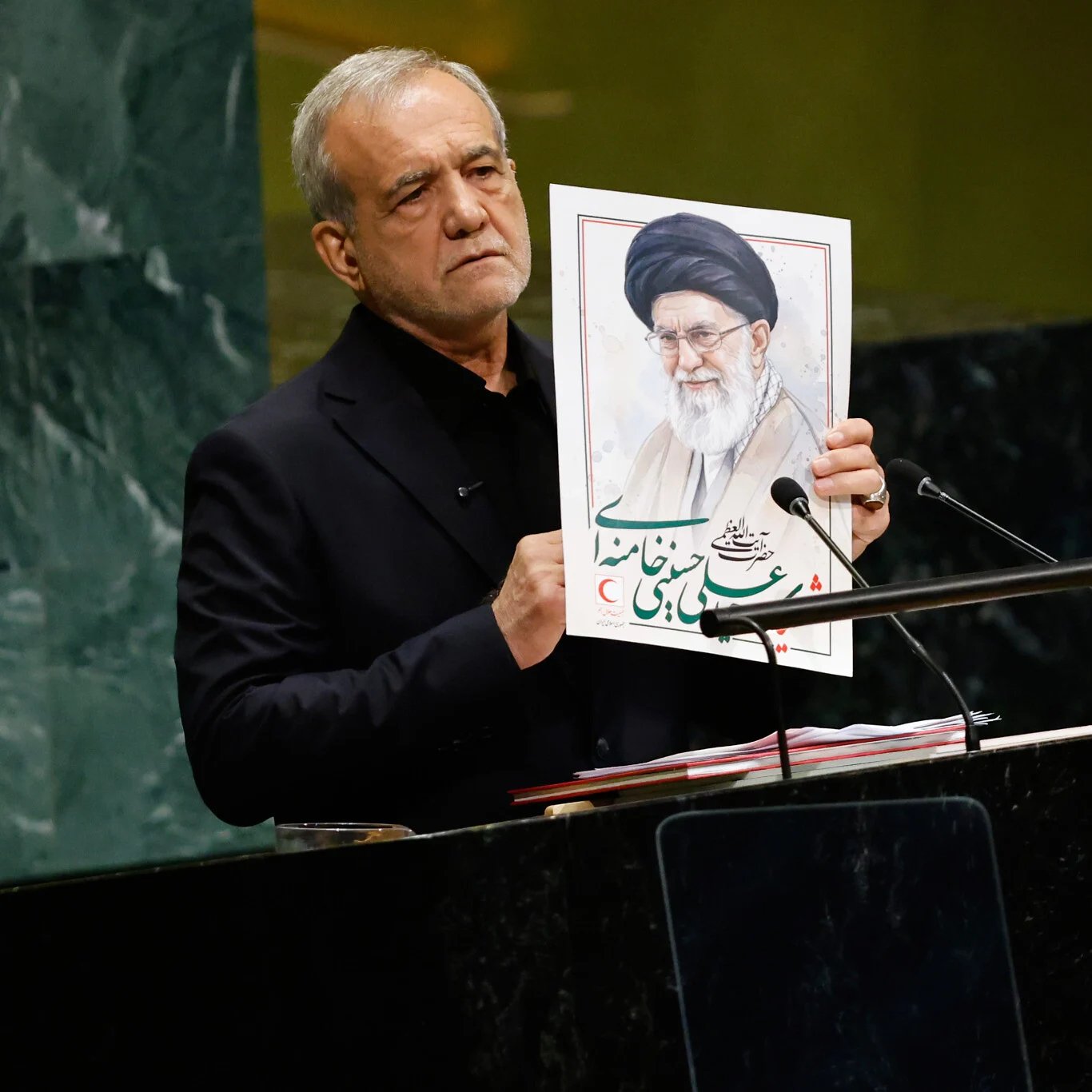
Iran has put a stark offer on the table to U.S. President Donald Trump: reopen the Strait of Hormuz in seven days, halt fighting on every front including Lebanon, and restart nuclear talks — but only if Washington first lifts its naval blockade, unfreezes Iranian funds, and waives oil sanctions. And even then, Tehran says it will make zero concessions on uranium enrichment.
It is the clearest diplomatic opening in seven months of U.S.-Iran war, and also the clearest illustration of why a deal remains so difficult.
The Offer, In Detail
Iranian Foreign Minister Abbas Araghchi detailed the plan to reporters outside the U.N. Security Council on Friday, September 25, in New York.
The sequence, as described by Araghchi and a senior Iranian official speaking to Reuters:
*Day 1:* The United States publicly announces it wants a diplomatic resolution, accepts the plan via Qatari mediators, and commits to a timeline.
*Days 1-5:* Washington lifts its blockade of Iranian ports, announces a waiver on oil sanctions, agrees to release frozen Iranian assets (previous Iranian demands have cited at least $12 billion), and observes a ceasefire on all fronts — explicitly including Lebanon, where Hezbollah is fighting Israel, as well as Yemen and Iraq.
*Day 6:* Iran clears mines and withdraws threats to shipping, reopening the Strait of Hormuz to normal maritime traffic.
*Day 7:* U.S.-Iran talks resume "for the final deal on mutually agreed subjects," including the nuclear program.
"The seven-day timeline will start as soon as the United States accepts this plan," Araghchi said. He called the conditions "nothing new," saying they mirror an understanding reached in June that quickly collapsed.
The White House response so far has been terse: U.S. officials are having "positive and constructive conversations" with mediators over the Iran war, and the U.S. is facilitating significant oil exports through the Strait.
Araghchi held three hours of indirect talks with Trump's envoys Steve Witkoff and Jared Kushner on Tuesday, mediated by Qatar on the sidelines of the UN General Assembly.
Why Hormuz Is The Leverage
Before the war, roughly one-fifth of the world's traded oil and gas passed through the Strait of Hormuz. After Iran mined the waterway and warned vessels not to transit without Tehran's coordination, shipping slowed to a trickle.
The economic pain has been global, but politically acute in Washington. With U.S. midterm elections on November 3, high energy prices and supply disruptions pose a direct threat to Trump and Republicans. Oil fell below $99 a barrel this week on news of a possible reopening — a sign of how much premium the war has baked in.
Iran knows this. As one Gulf News analysis put it, Hormuz has become Tehran's main point of leverage.
The U.S. naval blockade of Iranian ports, imposed as part of the war effort launched in February alongside Israel, is Washington's counter-leverage. It has choked Iran's crude exports and economy. Tehran wants it gone first.
Saudi Arabia, according to a person familiar with private deliberations speaking to AP, is skeptical of the latest push — fearing any concessions after Houthi missile and drone attacks on the Kingdom.
The Red Line: No Enrichment Concessions
Hours after Araghchi's presentation, a senior Iranian official told Reuters on Friday what Tehran would _not_ give up:
"Iran will show no flexibility over its nuclear program even if the United States accepts its proposal to reopen the Strait of Hormuz."
Specifically, the official said Iran would give no concessions on its right to enrich uranium or ship its highly enriched uranium stockpile out of the country — one of Washington's core demands.
This is the crux. Trump has spent seven months saying the stockpile is the problem. His administration, backed by Israel, has demanded not just a freeze but dismantlement and removal of highly enriched uranium.
Tehran is offering something different: monitoring without limits.
President Masoud Pezeshkian, in a meeting with journalists Thursday and in a Fox News interview, said he hoped a deal could be reached before the midterms and that the IAEA could return. Inspectors, in other words, are on the table.
But watching the stockpile is not the same as shrinking it.
Iran's position has been consistent since 2015 and hardened after U.S. strikes on its nuclear sites earlier this year: enrichment is a sovereign right under the NPT, and the stockpile stays in Iran.
Trump's Dilemma
Trump told reporters this week an agreement will come "eventually," either before or after the November midterms. He is in no rush to surrender the blockade — his strongest economic weapon.
His calculation has three layers:
1. *Domestic politics:* Reopening Hormuz before November 3 would lower oil prices and ease voter anger. Accepting a deal that leaves enrichment untouched, however, would expose him to attacks from hawks and Israel that he traded leverage for optics.
2. *Strategic:* U.S. officials believe the blockade is working. Lifting it, unfreezing funds, and waiving oil sanctions without an enrichment concession would give Iran economic breathing room while preserving its nuclear threshold status.
3. *Regional:* Israel, Saudi Arabia and the UAE all oppose concessions that don't address Iran's nuclear program and proxy network. A ceasefire that "includes Lebanon" would require Hezbollah-Israel de-escalation — something Washington cannot guarantee alone.
The June precedent looms large. A similar understanding then quickly crumbled, with each side accusing the other of bad faith. Araghchi's team says the new seven-day version is designed to avoid another prolonged negotiation. Critics say speed favors Iran: it gets sanctions relief up front, while nuclear talks are pushed to "day seven and beyond."
What Happens Next
Pezeshkian will not meet Trump in New York, the senior official confirmed. All contacts remain indirect via Qatar.
Three scenarios are emerging among analysts:
*1. Tactical de-escalation:* Trump accepts a phased version — partial blockade easing for partial Hormuz reopening — to get oil flowing before midterms, kicking the nuclear issue to later. This would be a ceasefire, not a peace deal.
*2. Stalemate:* Washington demands enrichment concessions as a precondition, Tehran refuses, and the war of attrition continues through the winter, with Hormuz remaining a chokepoint.
*3. Breakdown:* A Houthi strike on Saudi infrastructure or a Hezbollah escalation in Lebanon collapses the mediation, triggering renewed U.S.-Israeli strikes that Iran's central command has already warned would bring retaliation "without limitations."
For now, Iran is waiting on an answer Trump has already signaled he won't rush. Tehran says its enrichment stays untouched either way. Washington says talks are positive and constructive.
Between those two statements lies the gap that seven months of war has not closed: Iran wants to trade waterway access for economic survival; the U.S. wants to trade economic relief for nuclear rollback.
Until one side redefines what victory looks like, the seven-day clock cannot start.