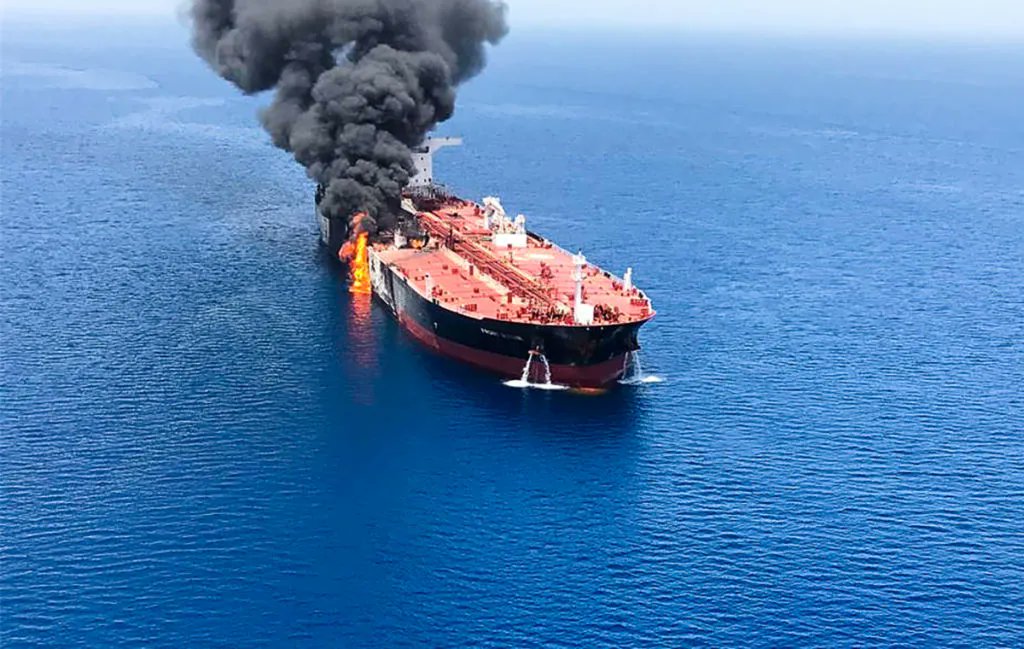
According to Reuters, citing three maritime security sources, *at least 12 oil, LNG and LPG tankers were hit between Sept 28 - Oct 5* around the strait. The UN's IMO confirmed 9 of those incidents, and it usually counts slower because it takes longer to verify.
It's the highest weekly total of the entire war. The previous worst was 8 incidents in the week of July 13.
*What happened on the water:*
The attacks were almost daily:
- *Sept 29:* 3 tankers hit by projectiles
- *Oct 1:* 1 tanker struck, fire on board
- *Oct 2:* 2 tankers hit, one suffered fire and blackout, drone reportedly fell into engine room
- *Oct 3:* Crude tanker hit above waterline
- *Oct 4:* 2 tankers hit, including an LPG carrier
- *Oct 5:* 3 tankers hit, one with engine-room fire
On Oct 5, the IRGC also hailed an inbound tanker 11 nautical miles north of Khasab, Oman, over VHF radio: "Turn back or be targeted." The vessel complied. Iran later seized another tanker that day, claiming maritime violations.
The US Navy-led Joint Maritime Information Center (JMIC) said Sunday: "These actions continue to demonstrate Iran's intent to assert presence along key transit lanes and maintain pressure on transiting vessels," noting persistent drone overflights, surveillance and radio hailing by the IRGC.
*The crew that got hurt:*
The most serious human toll came Tuesday, Oct 6. The Panama-flagged tanker *MT On Peace* was hit by an unknown projectile while transiting Hormuz, 9 nautical miles off Lima, Oman.
India's foreign ministry confirmed *12 crew injured, 11 of them Indian nationals* out of 19 total crew. Oman's Air Force evacuated 10 crew by helicopter to Khasab Hospital after a fire broke out. The ministry said: "We condemn the attack... targeting of commercial shipping and seafarers must end."
The tanker had been running with its transponder off, had discharged fuel oil at Fujairah on Aug 26, and is managed by Anglo-Eastern.
*Why this week matters:*
This surge came just as Gulf oil exports finally recovered. Shipping data from Kpler showed Gulf exports topped pre-war levels for about half of September, at over 81% of pre-war flows, despite the war. Before Feb 28, Hormuz handled ∼125 large vessels a day and 20% of world oil and LNG.
Iran has effectively tried to close the strait since the war began; the US is running a counter-blockade of Iranian ports and a protected corridor along Oman's coast using ship-to-ship transfers in the Gulf of Oman to reduce exposure. But freight is now $1M per day per tanker to China, insurance at records.
Oil prices reflect the danger: Brent closed at $100.58 and WTI at $89.44 on Oct 6, with analysts saying a truly closed strait would mean $118 Brent, while a dangerous-but-open strait holds near $100.
In short: barrels are moving again, but for tanker crews, this was the worst week yet - and the IRGC is making sure every transit feels it.
Sources: Reuters Oct 7, JMIC note Oct 5, India MEA, Oman MOD, UKMTO warnings 156-26.