18/09/26
By AfterPost
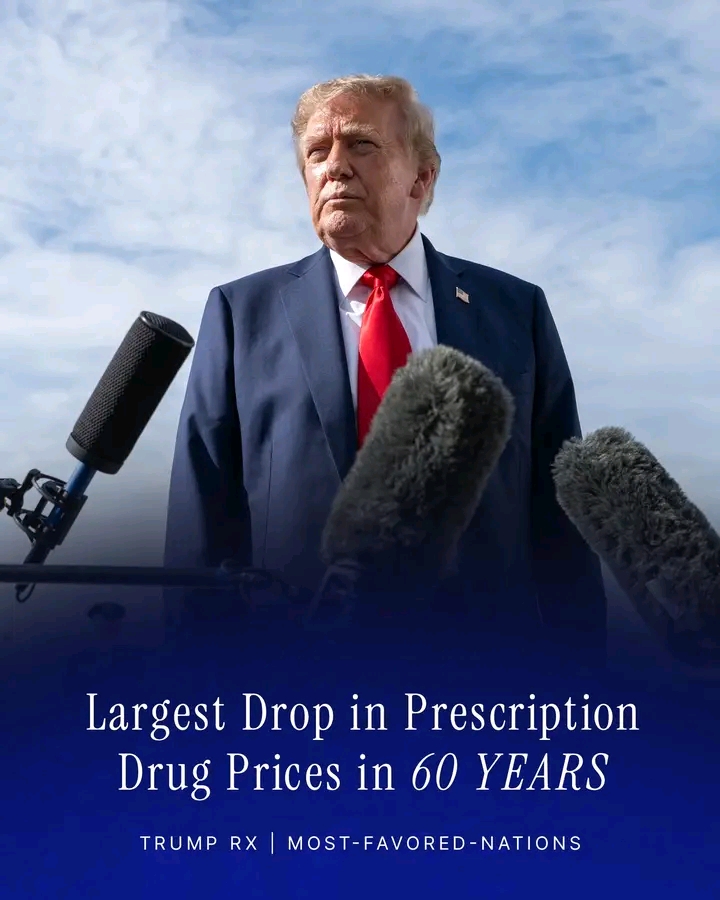
The announcement was made in the Oval Office with Govs. Sarah Huckabee Sanders (AR), Larry Rhoden (SD) and Tate Reeves (MS) present to tout state savings. It builds on 26 voluntary deals the White House says it has now secured with drugmakers covering 89% of the branded drug market.
*What MFN For Medicaid Means*
Under MFN, drug companies agree to sell their medicines to state Medicaid programs at the lowest price they charge in other developed countries — typically Europe, Canada, Japan.
Medicaid is the joint federal-state program covering 66+ million low-income Americans, people with disabilities, and children. By law it already gets steep rebates, but administration officials say for high-cost specialty drugs, the international price is still far lower.
The White House says the voluntary framework will generate *$64.3 billion in federal and state savings over the next 10 years*. The savings accrue to state budgets and federal taxpayers, not directly to patients — most Medicaid patients pay $0-$3 for prescriptions.
But the deals also have a direct-to-consumer component:
*TrumpRx and GLP-1s*
All participating companies must make select drugs available for cash purchase through their own portals, aggregated on http://TrumpRx.gov. That includes:
- Wegovy, Zepbound, Mounjaro, Ozempic — now ∼$350/month cash pay vs $1,000+ list, with $50 copay for Medicare once coverage begins in 2026. Oral versions expected at $150.
- Insulin (NovoLog, Tresiba) at $35/month
- Migraine (Emgality $299/pen, was $742), Diabetes (Trulicity $389/month, was $987)
The White House estimates GLP-1 users without insurance will save $3,000/year and IVF patients $6,000+ on fertility meds.
*Who Signed?*
First wave (Sept-Nov 2025): Pfizer, Eli Lilly, Novo Nordisk, AstraZeneca and 13 others including J&J, Merck, AbbVie.
Second wave (Aug 31, 2026): Nine mid-size and foreign makers — Alcon, Astellas, BeOne Medicines, BridgeBio, CSL, Kyowa Kirin, Sun Pharma, Teva, UCB — collectively pledging $19.6 billion in U.S. manufacturing plus 290 metric tons of active pharmaceutical ingredients (API) to the strategic stockpile.
In exchange, the administration has granted 3-year relief from threatened Section 232 pharmaceutical tariffs. BeOne and Kyowa Kirin publicly confirmed tariff exemptions/deferrals.
All 26 companies also agreed to guarantee MFN pricing on *all future new medicines* they launch — a clause designed to stop launch-price gouging and force them to raise prices abroad instead. Lilly pledged $27B in new U.S. plants, Novo Nordisk $10B, AstraZeneca $50B.
*What's GENEROUS?*
The Medicaid model being rolled out to all states is called *GENEROUS*. A White House spokesperson confirmed to Barron's that participation is now nationwide.
CMS Administrator Dr. Mehmet Oz said Friday: "By the end of the term, 95% of all drugs sold in America — branded and generic — will be available at most-favored-nation pricing."
*The Criticism*
NPR reporting this week noted that no drug company or CMS would confirm that _all_ drugs are covered — experts warn companies can cherry-pick drugs where they already give Medicaid good discounts, limiting real savings. Drugmakers have also opted to raise prices in Europe to meet MFN, rather than cut U.S. list prices, which blunts patient impact.
Still, Mizuho analyst Jared Holz wrote Friday morning that the health of large-cap pharma has "improved markedly over the past 12-18 months, much of this due to drug pricing agreements and greater certainty around the political climate."
The White House says legislation is coming to require insurers to count TrumpRx cash purchases toward deductibles and out-of-pocket maximums.
This is the core of Trump's affordability pitch heading into the midterms: lower foreign free-riding, more U.S. manufacturing, and billions back to state Medicaid budgets.
Sources: White House Fact Sheets, Barron's, Semafor, Reuters, Morningstar